Co-design Center for Quantum Advantage
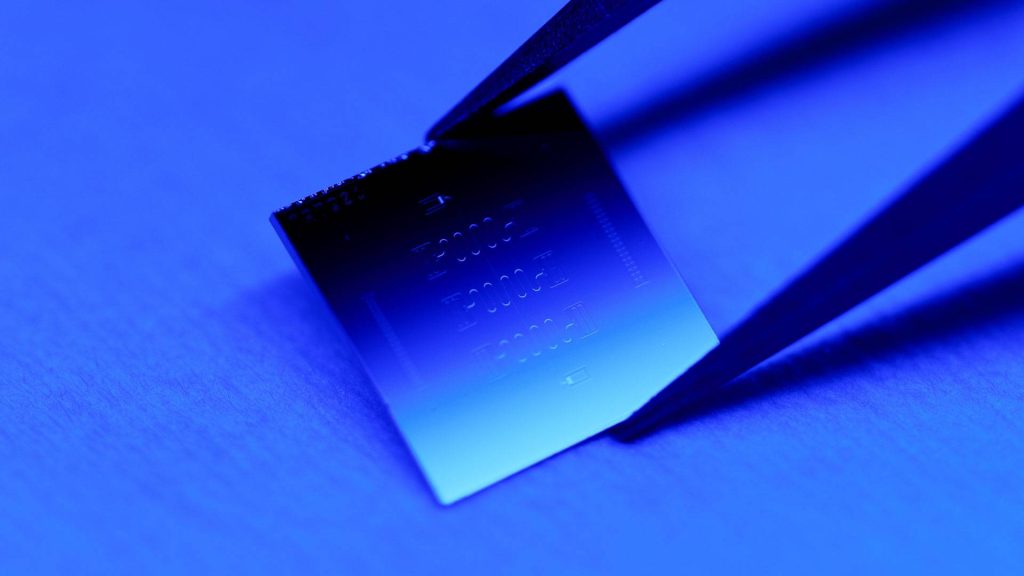
By pairing the materials expertise at national labs with the device-building capabilities of university partners, C2QA researchers developed a detailed understanding of the mechanisms that limit coherence in superconducting qubits. This work culminated in the development of tantalum transmon qubits with record-breaking coherence times exceeding one millisecond. These qubits last three times longer than the previous best reported in a lab setting and could improve industry processors by a factor of 1,000. Learn more in Nature or Princeton Engineering News.
Q-NEXT
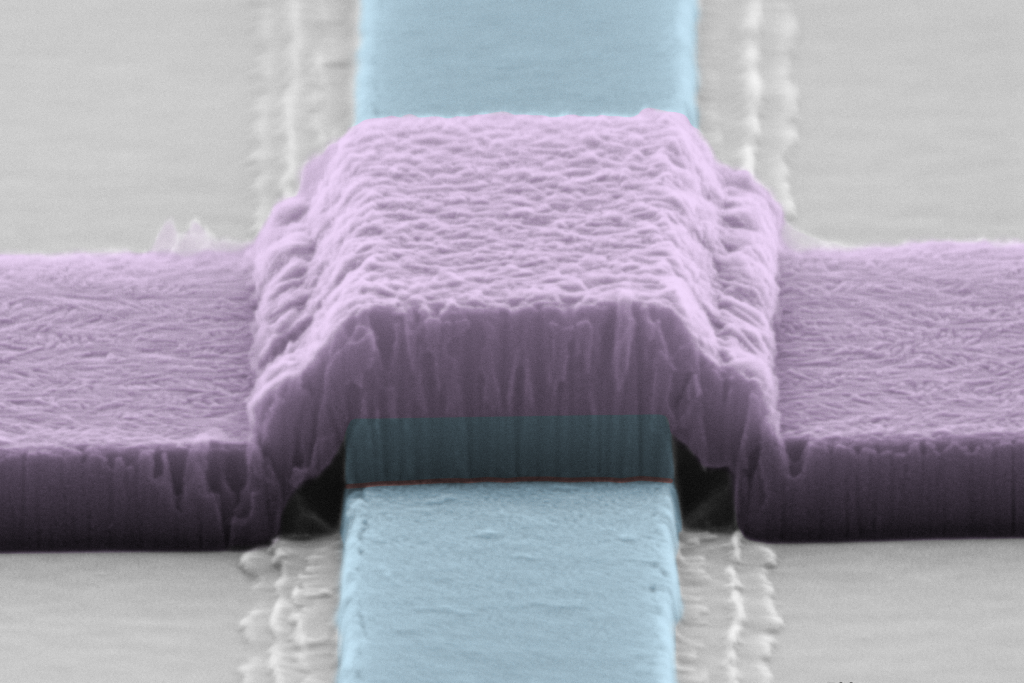
Q-NEXT collaborators at Stanford University and the University of Chicago engineered a niobium-and-aluminum qubit that achieved a coherence time of 62 microseconds, 150 longer times longer than its best-performing niobium predecessors. The qubit also exhibited a quality factor of 2.57 x 10⁵ — a 100-fold improvement over previous comparable qubits — and can in principle operate above 1 Kelvin, at conventional cryogenic temperatures. Read more in Argonne News.
Quantum Systems Accelerator
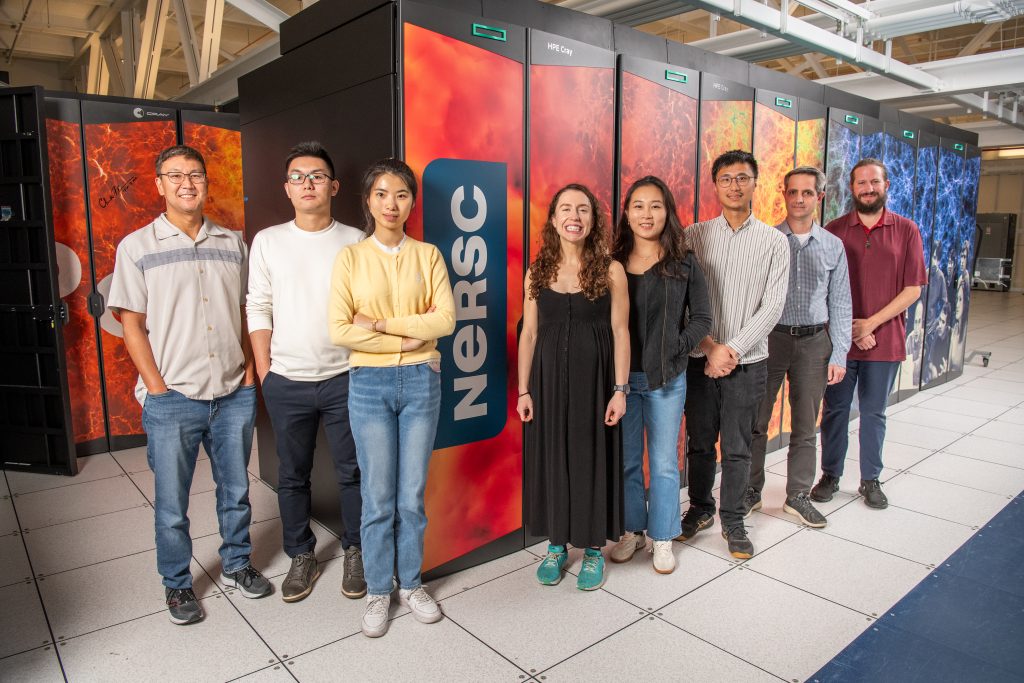
Advancing its mission to realize scalable, high-fidelity atom-based and superconducting quantum simulators, Quantum Systems Accelerator (QSA) researchers at Lawrence Berkeley National Laboratory and the University of California, Berkeley achieved the first full-scale electromagnetic simulations of quantum chips using 7,000+ NVIDIA GPUs on the Perlmutter supercomputer, modeling a 14-qubit flip-chip design to reveal crosstalk and accelerate chip design. The work was recognized in President Trump’s Year One Science and Technology Highlights and featured at NVIDIA GTC 2026.
Quantum Science Center
Quantum Science Center researchers have realized significant advancements across both quantum hardware and software. Teams delivered the first, large-scale quantum computer simulation of nuclear physics exceeding 100 qubits—expanding the frontier of what quantum systems can model—while concurrently integrating open-source programming of industrial quantum computers with DOE leadership-class high-performance computing systems. Together, these advances enable more complex, hybrid simulations which accelerate scientific discovery, energy innovation, and national security applications. Learn more at QScience.org.
Superconducting Quantum Materials and Systems Center
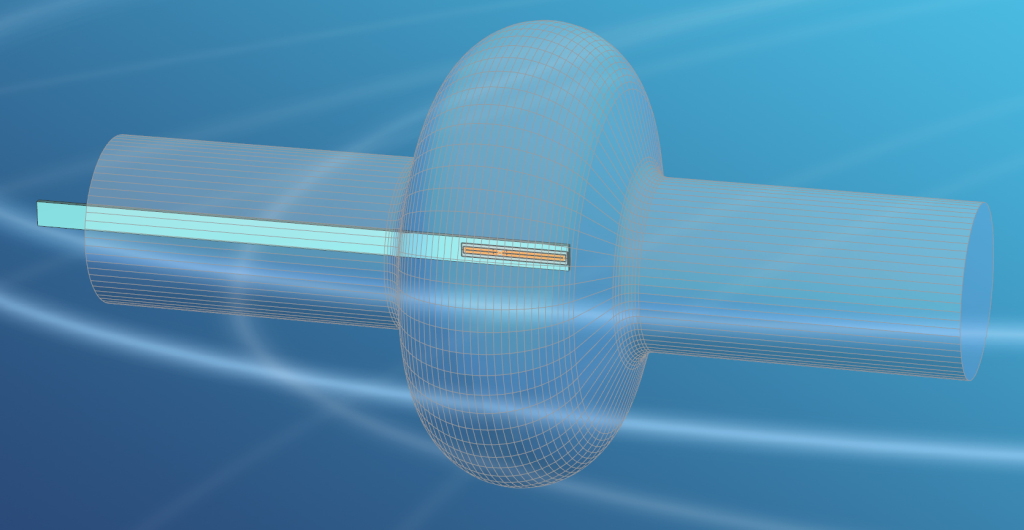
SQMS has achieved >20 ms coherence in cavity-based quantum architectures, building blocks for the qudit-based prototype and for the microwave interconnects between IBM processors, alongside record 1.2 ms coherence in rhenium transmon qubits—key ancillary elements necessary for these systems. A ~40× leap in cryogenic cooling power was recently demonstrated supporting scalable data centers deployment, while world-leading dark photon constraints highlight scientific reach of these systems. Partnerships with industry, including Maybell Quantum and IBM, accelerate translation to large-scale, fault-tolerant quantum platforms.